

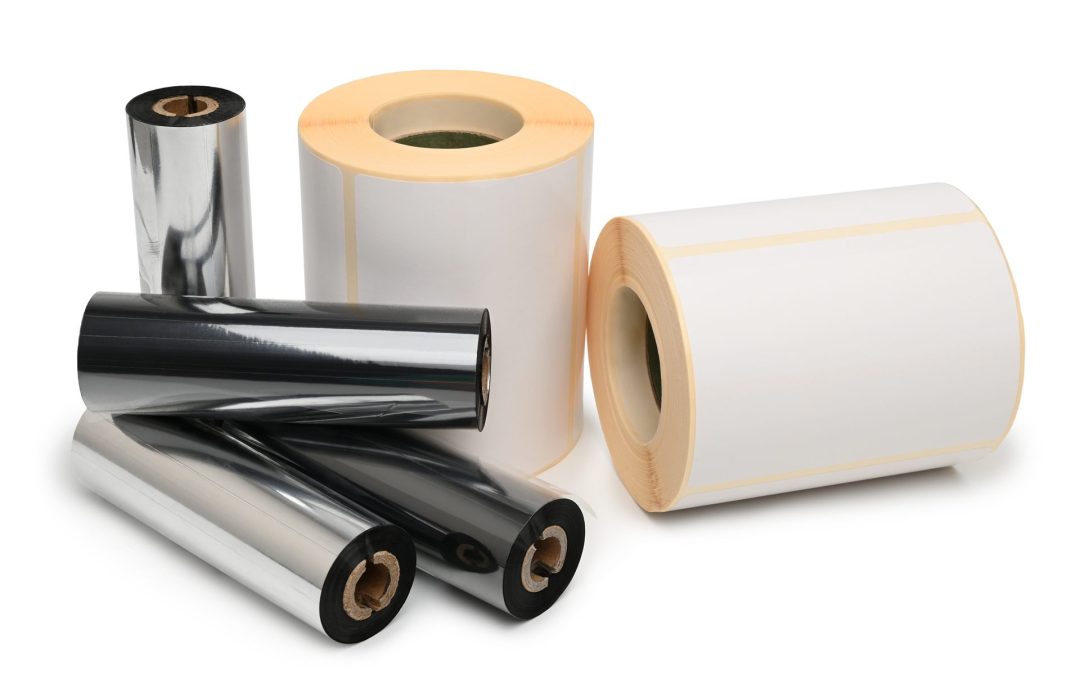
Thermal transfer labels and direct thermal labels can both provide reliable barcode and variable-data identification. The right choice depends on the label’s lifespan, environment, handling and the equipment already used in your operation.
Rather than treating one method as universally better, it is more useful to match the print technology to the job.
When direct thermal labels make sense
Direct thermal printers create an image on heat-sensitive label material without using a ribbon. With fewer consumables to manage, the method can be simple and efficient for high-volume, short-life identification.
Common uses include shipping and courier labels, dispatch labels, temporary inventory identification and pallet or carton labels that only need to remain readable through a defined logistics cycle.
Where the operating conditions and required lifespan are modest, direct thermal can avoid unnecessary material and ribbon costs.
What can affect a direct thermal image
Heat, sunlight, abrasion and certain chemicals may affect the printed image. A barcode can fade, darken or become harder to scan if the material is not suited to its exposure.
Material quality also varies. A coated direct thermal construction may perform very differently from a basic economy grade, so it is worth testing the actual material rather than judging the printing method by one previous label.
When thermal transfer labels are the better fit
Thermal transfer printing uses a ribbon to create the image. It is generally the stronger option when labels must remain readable for longer, face repeated handling or operate in more demanding industrial conditions.
Applications can include:
- warehouse racking and location identification;
- asset and equipment labels;
- industrial product identification;
- labels exposed to moisture, cleaning or abrasion; and
- long-term batch, serial and traceability information.
Choose the ribbon with the label material
The facestock and ribbon must be compatible. A tough synthetic label does not guarantee a durable result if the printed image can be rubbed or cleaned away.
Wax, wax-resin and resin ribbons provide different performance characteristics. The appropriate option depends on the material, print speed, required resistance and conditions after application.
Check the printer before changing specifications
Some printers can operate in both direct thermal and thermal transfer modes. Others are designed for direct thermal only. A specification review should include the printer model, resolution, media path, roll size, print speed and the environment around the printer.
Testing should use the real printer and normal operating settings. A label that performs well in a controlled demonstration still has to print consistently during a busy production or dispatch shift.
Using both methods can reduce total cost
An Australian warehouse or manufacturing site may have several different identification lifecycles. Dispatch labels may only be needed for days, while racking, assets or equipment labels must remain usable for years.
Using direct thermal for appropriate short-life work and thermal transfer for durable applications can be more economical than forcing every label into one specification.
Variable data is part of the specification
Saito Australia can manage variable data for barcode, product, batch, serial, logistics and location labels. Consistent data formatting helps connect the physical label with inventory, production and traceability systems.
The data, print method, ribbon, label material and adhesive all need to support the same operational outcome. A label is only successful when the information remains attached, readable and correctly associated with the item or location.
Questions to answer before ordering
- How long must the printed image last?
- Will the label face heat, sunlight, moisture, chemicals or abrasion?
- What surface will it be applied to?
- Which printer and ribbon are currently used?
- How quickly are labels printed and applied?
- What happens if the barcode becomes unreadable?
The best choice is the one that meets the required performance without adding cost or complexity the application does not need. Testing the complete label, ribbon and printer combination is the most reliable way to confirm it.